Promotion: 10% off all Apple watch Straps. Use code:APPLE10 at checkout


Why I Love Vintage Watches

What Makes A Watch "Vintage"?
Ask ten watch collectors what qualifies as “vintage” and you’ll probably get ten slightly different answers. In general, though, most agree that a watch earns the vintage label once it’s around 20 to 30 years old. That puts it firmly outside modern production, often from a time before contemporary manufacturing standards, marketing strategies, and even design philosophies took over.
But age alone isn’t really what makes a watch feel vintage. Plenty of 30-year-old watches exist that don’t stir much emotion. What truly defines a vintage watch is context. It’s the era it came from, the way it was made, the design language of its time, and sometimes the story attached to it. Vintage watches are time capsules. They reflect how people dressed, traveled, worked, and even dreamed decades ago.
That’s why vintage watches hold such a special place in my heart. They represent designs from a bygone era, many of which will never be produced again in quite the same way. Even when brands attempt modern reissues, something always changes. Case sizes grow, materials improve, tolerances tighten, and the charm subtly shifts.
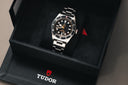
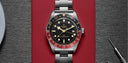
Think of watches like the original Cartier Santos-Dumont, the Rolex Chronograph 6238, or the iconic Rolex Submariner 6538 made famous by James Bond. You can buy modern watches inspired by these designs today, like the Tudor Black Bay 54 or 58, but inspiration is not the same as replication, the soul is different.
Below are a few vintage watches I either own, deeply admire, or realistically have zero chance of owning. Each one helps explain why vintage watches continue to captivate collectors long after they’ve left the showroom.
Omega Seamaster 2558.80
This one is personal. The Omega Seamaster 2558.80 is a hand-me-down from my father and, without question, the most valuable watch I own sentimentally.
Produced in the 1990s, this Seamaster sits right in that sweet spot where vintage meets modern. It has the familiar design cues that made the Seamaster line famous, but without the oversized cases and glossy finishes of many modern sports watches. At roughly 30 years old, it comfortably qualifies as vintage by most definitions.
Last serviced in 2019, it’s powered by an ETA-based movement that continues to prove why ETA calibres have such a strong reputation. Even after decades of wear, it still keeps near-perfect time. There’s something deeply reassuring about that. It reminds you that vintage doesn’t mean fragile or obsolete. When properly maintained, these watches are built to last.
More than anything, this Seamaster represents why vintage watches matter. They carry stories. Every scratch, every faded edge, every service record is part of a life lived, not just a spec sheet.
1960's Seiko Sportsman
The Seiko Sportsman is a reminder that vintage doesn’t have to mean Swiss or expensive. I stumbled upon this piece at Retro Factory in Katong Square, and the moment I saw it, I knew it was coming home with me.
This watch is roughly 60 years old, which is wild when you stop to think about it. The fact that it still runs at all is impressive. The fact that it only runs about five minutes fast per day is even more impressive. For a mechanical watch from the 1960s, that’s honestly not too shabby.
Seiko’s early mechanical watches are often overlooked, but they played a massive role in shaping the brand’s future. These were watches built for everyday people, meant to be reliable, affordable, and durable. That philosophy eventually led Seiko to disrupt the entire Swiss watch industry.
Wearing this watch feels like wearing a piece of quiet history. It’s understated, honest, and completely unpretentious.
Rolex 6238 "Pre-Daytona" Chronograph
The Rolex 6238 is one of those watches that seasoned collectors instantly recognise, while casual observers might completely miss.
At a glance, you could mistake it for a vintage Heuer Carrera, and that’s not an insult in the slightest. Vintage Carreras are some of the best-looking chronographs ever made. The Rolex 6238 shares that same clean, balanced, no-nonsense design language that prioritised legibility over branding.
This was Rolex before the Daytona name existed. No tachymeter bezel. No hype. Just a beautifully proportioned chronograph with understated elegance. Ironically, it’s that restraint that makes it so desirable today.
Prices have climbed well into “dream watch” territory for most collectors, myself included. But even if I never own one, the 6238 represents a time when Rolex wasn’t yet the marketing juggernaut it is today, but simply a maker of excellent tool watches.
Rolex Big Crown Submariner 6538 "James Bond"
Few watches are as culturally significant as the Rolex Submariner 6538. Released in 1955, this Submariner featured an oversized 8mm crown, earning it the “Big Crown” nickname.
At the time, it was just another professional dive watch. It wasn’t until 1962, when Sean Connery wore it in Dr. No that it became immortalised as the James Bond Submariner. That single on-screen appearance cemented its place in pop culture and watch history forever.
Beyond the Bond connection, the 6538 is fascinating because it represents Rolex’s early dive watch experimentation. No crown guards, slimmer proportions, and a level of simplicity that modern Submariners have long moved away from.
Owning one today requires deep pockets and even deeper patience. But its legacy is undeniable. This is a watch that didn’t just tell time, it defined an image.
Heuer Carrera 2447SN
Before TAG Heuer, there was just Heuer. And the Heuer Carrera 2447SN is a perfect example of why many collectors prefer the brand’s earlier era.
This Carrera is pure motorsport heritage. Clean dial, balanced sub-registers, and proportions that feel just right. No unnecessary text, no oversized case, no attempt to modernise what was already perfect.
While TAG Heuer has released modern Carrera reissues, including a 60th anniversary model, they’re larger, limited, and somehow miss the magic of the originals. The vintage Carreras were designed with intent, not nostalgia marketing.
It’s a watch that feels purposeful. Every element serves a function, and nothing feels added for the sake of trends.
Final Thoughts
So what really makes a watch vintage? It’s not just the age. It’s the design language, the materials, the movement technology, and the era it represents. Vintage watches come from a time when watches were tools first, luxuries second.
They weren’t designed to chase trends or social media attention. They were designed to work, to last, and to quietly do their job. That honesty is what makes them so appealing today.
Whether it’s a sentimental hand-me-down, a lucky flea market find, or a grail you admire from afar, vintage watches connect us to the past in a way few objects can. They remind us that good design endures, craftsmanship matters, and sometimes, the best watches are the ones that have already lived a full life before finding their way to your wrist.