Promotion: 10% off all Apple watch Straps. Use code:APPLE10 at checkout


Brand History: Tudor

Not just a cheaper Rolex
When people talk about modern watch brands that successfully balance heritage, value, and contemporary design, Tudor is almost always a part of this conversation. Often described as the more accessible sibling to Rolex, Tudor has grown far beyond that shadow. Today, it stands as a fully realised brand with its own identity, design language, and following. Its story is one of smart positioning, technical evolution, and a remarkable revival that transformed it from a practical alternative into one of the most respected names in modern watchmaking.
Origins
Tudor was founded in 1926 and later fully established in 1946 by Hans Wilsdorf, the visionary behind Rolex. Wilsdorf's idea was straightforward but ambitious: create watches that carried the reliability and technical philosophy of Rolex while being more affordable to a wider audience.
He understood something fundamental about the market: not everyone could justify or afford a Rolex, but many still wanted robust, dependable timepieces, and Tudor would fill that gap. The formula was clever - Tudor watches often used Rolex-designed cases, crowns, and bracelets paired with high-quality outsourced movements such as the revered ETA 2824 from Swatch. This allowed Tudor to deliver durability and precision without the cost of in-house movement production.
From the beginning, Tudor was positioned as a tool watch brand. Advertising emphasized ruggedness, reliability, and real-world performance rather than luxury status. This practical identity would shape the brand for decades.
Tool watches
Through the 50's and 60's, Tudor established itself as a serious maker of professional instruments. The Tudor Oyster Prince became a flagship model, marketed heaviliy for its robustness. Real-world testing campaigns showed watches being worn by miners, construction workers, and explorers to demonstrate their resilience.
The turning point came with Tudor's dive watches. Introduced in 1954, the Tudor Submariner models closely mirrored their Rolex counterparts in capability but were offered at a more attainable price. These watches earned credibility through military adoption, most notably by the French Navy, which used Tudor dive watches for decades.
This professional use cemented Tudor's reputation as a maker of reliable instruments. The watches were not styled like tools, they were tools. Snowflake hands, introduced later, improved legibility underwater and became one of Tudor's most recognisable design signatures. 
Identity struggle
Despite strong early success, Tudor faced challenges in the late 20th century. Quartz technology disrupted the mechanical watch industry, forcing many brands to rethink their strategies. Tudor continued producing mechanical watches but struggled with brand positioning, especially as Rolex's prestige grew stronger.
In some markets, Tudor withdrew almost entirely, becoming a quieter presence. For many collectors, Tudor watches from this era were appreciated but often seen as "Rolex alternatives" rather than standalone icons. The brand still maintained quality, but its identity lacked clarity in a rapidly changing marketplace.
Modern Tudor
Everything changed in the late 2000s and early 2010s as Tudor began a deliberate and confident revival, leaning heavily into its heritage while modernizing its design and engineering.
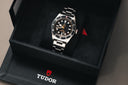
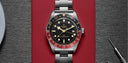
The launch of the Heritage Chrono in 2010 signaled a new direction. It reintepreted vintage Tudor designs with contemporary materials and proportions. This was followed by the Heritage Black Bay in 2012, arguably the watch that redefined Tudor for a new generation.
The Black Bay captured vintage dive watch aesthetics without feeling like a replica. Snowflake hands, domed crystals, and warm colour accents gave it character while modern construction ensured durability. It was nostalgic without being stuck in the past.
Just as important was Tudor's move to in-house calibers. By developing proprietary movements with extended power reserves and chronometer-level performance, Tudor strengthened its independence and credibility. The brand was no longer a value propoition - it was a serious watchmaker. 
Design philosophy
Today, Tudor occupies a unique space in the watch industry. It blends vintage inspiration with modern reliability in a way that feels authentic rather than forced. Models like the Black Bay, Pelagos, Ranger, and Royal each reflect different aspects of Tudor's DNA: diving heritage, tool watch ruggedness, exploration spirit, and everyday refinement.
The Pelagos, for example, showcases Tudor's technical ambitions with titanium construction, impressive water resistance, and a focus on professional diving capability. Meanwhile, the Black Bay line continues to evolve with variations that appeal to both vintage enthusiasts and modern collectors.
Tudor's success lies in restraint: the watches feel purposeful and design elements serve functions as much as form. There is a sense that Tudor watches are meant to be worn, not just admired. 
Cultural relevance
Another key element of Tudor's revival has been its confident marketing. The "Born to Dare" campaign positions the brand as bold, adventurous, and forward-looking. Collaborations with athletes, explorers, and ambassadors reinforce Tudor's connection to real-world performance.
Importantly, Tudor has embraced its heritage without being trapped by it. Rather than endlessly recreating old references, the brand uses its past as a foundation for innovation. This balance resonates strongly with modern enthusiasts who appreciate authenticity.
Collectors now view Tudor as a brand with its own identity rather than a stepping stone to Rolex. Vintage Tudor pieces have gained renewed appreciation while current models attract both newcomers and seasoned watch lovers. 
Final thoughts
Tudor's journey is one of evolution rather than reinvention. From its origins as a practical alternative to Rolex, through decades of tool-watch credibility to its modern renaissance, the brand has consistently focused on delivering reliable, purpose-driven watches.
What makes Tudor compelling today is its clarity of identity. It honours its heritage while embracing modern engineering and design. The watches feel intentional - grounded in history yet fully relevant to contemporary wearers.
In an industry that often oscillates between nostalgia and novelty, Tudor has found a rare balance. It makes watches that feel honest, robust, and wearable. They're instruments designed not just to tell time, but to accompany their wearers on adventures.
That enduring practicality, rooted in nearly a century of watchmaking philosophy, is exactly why Tudor continues to thrive.